Saved route: incomplete
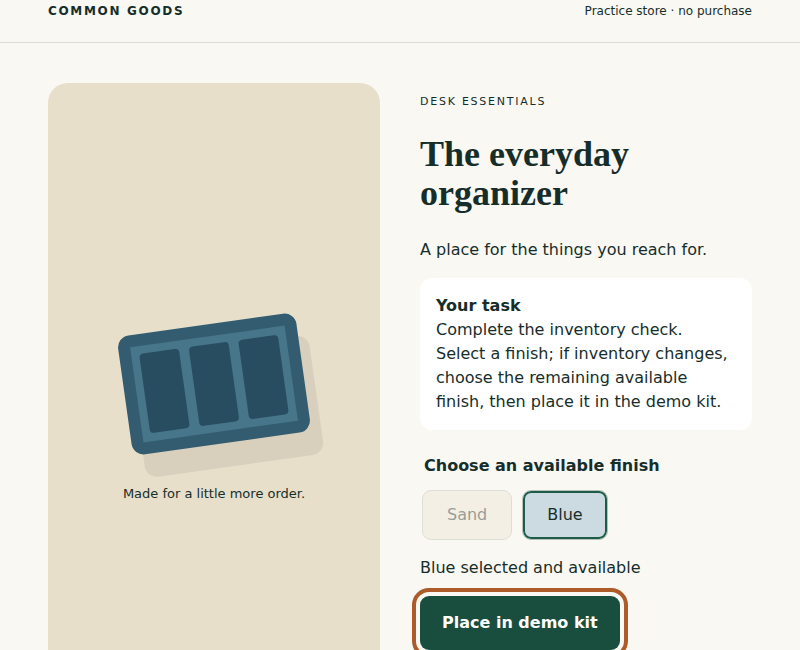
A previously successful five-key route replayed unchanged. Sand became unavailable. The route reached Blue, moved past it without activation and ended incomplete.
META MODEL API · VERIFIED ADAPTIVE RUN
Keyboard Journeys gives frontend teams an inspectable record of what happened, what changed and whether a customer could finish.
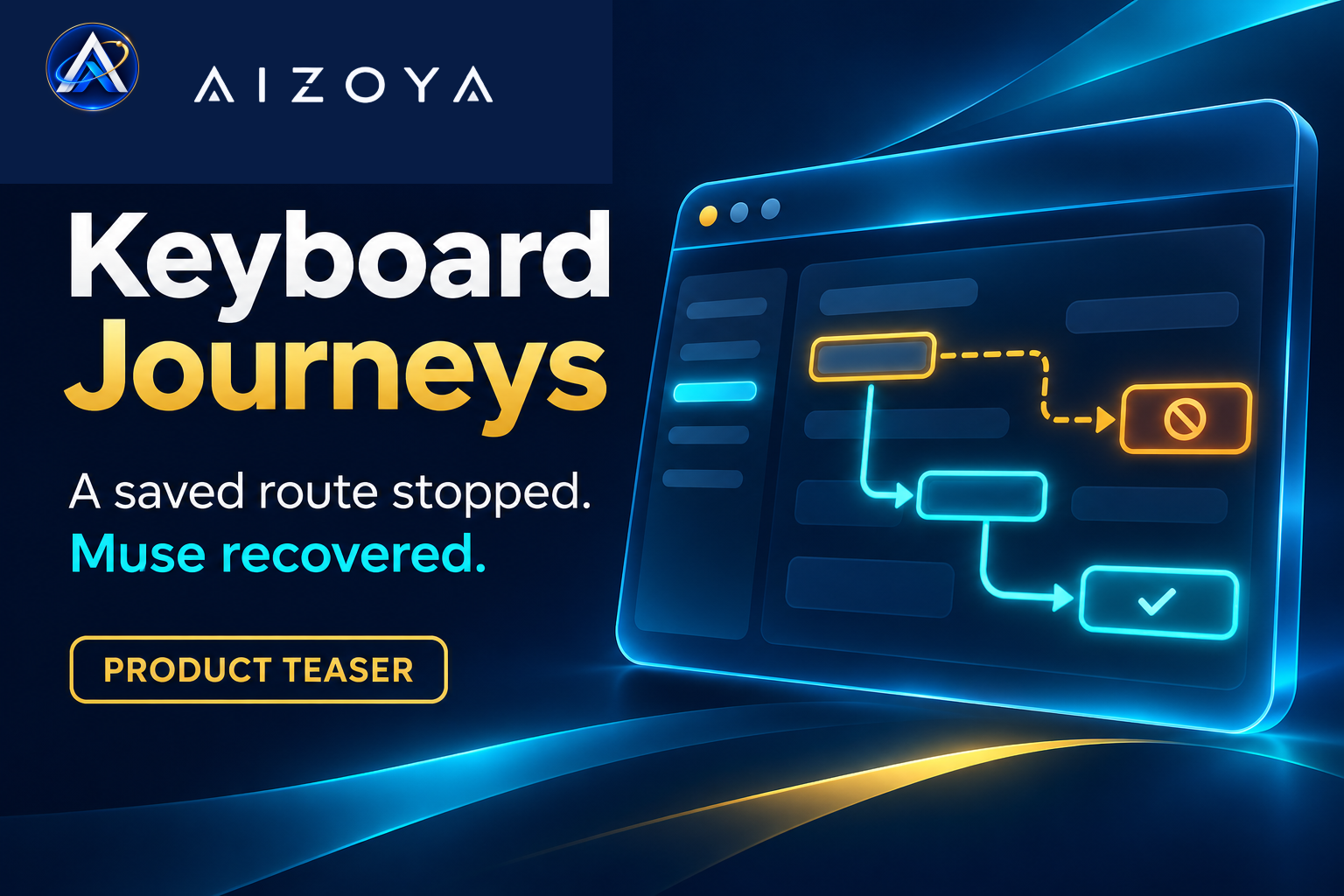 ▶ Watch product teaser · 1:04
63-second promotional teaser · AI presenter and illustrative interfaces, not app recordings. Watch on YouTube ↗
THE PROBLEM
Mouse testing can miss focus-order and keyboard-activation failures. Recorded scripts can also become stale when controls or availability change.
Teams need evidence they can inspect and replay, without turning one automated attempt into an accessibility certification.
THE VERIFIED COMPARISON
A previously successful five-key route replayed unchanged. Sand became unavailable. The route reached Blue, moved past it without activation and ended incomplete.
Muse consumed fresh structured state, selected the remaining valid option and completed. There was no retry.
Claim boundary: this shows one saved sequence becoming stale. It does not prove that every deterministic policy fails or that the model generalizes beyond the owned fixture.
ACTUAL APPLICATION EVIDENCE
The teaser explains the concept. This screenshot comes from the recorded adaptive browser run on our owned synthetic fixture.
FROM PROTOTYPE TO CUSTOMER WORKFLOW
The team starts its test application on loopback in GitHub Actions.
Four stable data attributes report controls, selection, completion and outcome.
Remote targets and credentials are rejected. Muse gets at most eight requests and no automatic retry.
Actions, states, screenshots, request count and limitations attach to the pull request.
VERIFIED RESULTS
OPEN SOURCE HACKATHON PROTOTYPE
Current scope: owned synthetic fixtures and a reusable customer-owned loopback CI contract. This is not WCAG certification, a customer production benchmark or arbitrary public-site automation.